Here's something that shocked us when we first started working with therapists: 73% of potential therapy clients say they choose their therapist based on how they present themselves online before they even read credentials or check insurance! We learned this after launching our branding agency over a decade ago and working with over 200 mental health professionals who came to us wondering why their phones weren't ringing despite being excellent clinicians.
Branding feels uncomfortable for a lot of therapists, and we get it. You went into this field to help people, not to become marketers. The word "brand" can feel salesy, inauthentic, even icky when you're in the healing profession. But here's the truth we share with every therapist we work with: your brand isn't about tricking people into working with you. It's about helping the right people find you in a sea of "accepting new clients" directories.
We've spent the last 13 years specializing in therapy branding – figuring out what works, what flops, and what feels authentic versus what feels like putting on a costume. We've seen therapists transform their practices by finally getting clear on their brand, and we've also seen the expensive mistakes that happen when branding gets ignored or done halfway. This guide is everything we know about creating a therapy brand that feels authentic while actually attracting the clients you're meant to serve. Let's dive in!

What Is Branding for Therapists
(And What It's NOT)
When therapists first come to us, most think branding is just about having a pretty logo and matching colors on their website. We have to tell them: that's design, not branding. Your brand is actually the entire experience someone has with your practice, from the moment they find your Psychology Today profile to the way your office feels when they walk in for their first session.
Here's what branding actually is: it's the promise you make to clients about what working with you will be like. It's the feeling they get when they interact with any part of your practice. It's how you show up consistently across every touchpoint, whether that's your website, your voicemail, or your intake paperwork.
And here's what it's NOT: it's not manipulation. It's not being fake or putting on a show. It's not about tricking people into choosing you over another therapist. We've worked with too many therapists who tried to brand themselves as something they thought they "should" be instead of who they actually are, and it always backfires eventually.
The ethics piece is huge here, and honestly, it's what keeps many of our clients stuck before they reach out to us. They worry that marketing themselves feels gross, like they're treating people's pain as a commodity. But here's what we tell them: "If the people who need you most can't find you, how is that ethical?" This reframe changes everything.
Your brand in the therapy world needs to do something special that brands in other industries don't – it needs to communicate safety, trust, and understanding before someone even contacts you. People researching therapists are often at their most vulnerable. Your brand should feel like a warm hand reaching out, not a used car salesman trying to close a deal.
We approach therapy branding this way: your brand should be an extension of your therapeutic approach. If you use narrative therapy in sessions, your brand should tell stories. If you value humor in the therapy room, your brand voice should be conversational and sometimes funny. See how that works? It's not separate from who you are as a clinician – it IS who you are as a clinician, just translated into visual and written form.
The other thing therapists get wrong is thinking their brand is just for attracting new clients. We always explain that your brand also communicates to referral sources, to other professionals in your community, even to your current clients about what they can expect from you. It sets the tone for everything.
Why Most Therapists Struggle with Branding
Let's be real for a second. Most therapists became mental health professionals because they wanted to help people, not because they wanted to become content creators or brand strategists. When therapists come to our agency, they often tell us about sitting in grad school learning attachment theory and CBT interventions, never once hearing about the business side of running a practice.
The "helper" mentality is beautiful, but it creates real visibility resistance. We see this all the time – amazing therapists who are almost allergic to promoting themselves. They feel like if they're good enough, clients will just find them somehow. But that's not how it works anymore, especially with thousands of therapists competing for attention online.
Impostor syndrome hits hard when you're trying to build a brand. We've had clients literally cry in strategy sessions because they felt like frauds for claiming to be "experts" in anything. One therapist told us, "Who am I to say I'm the best person for trauma work when there are therapists with way more experience than me?" We had to remind her that she wasn't claiming to be the ONLY person – just the right person for HER ideal clients.
The fear of being too salesy is probably the biggest obstacle we encounter. Therapists will come to us with websites that say things like "I provide a safe, welcoming space" and wonder why that's not working. It's not working because literally every therapist says that! We have to push our clients to be more specific, more personal, more THEM – and that feels scary.
We also see analysis paralysis constantly. Therapists are smart, analytical people who want to make the "right" choice. But there are infinite branding options out there, and without expertise, it's overwhelming. Should you go with sage green or dusty blue? Sans serif or serif font? Formal or casual tone? Without a framework, these decisions feel impossible.
Time and budget constraints are real too. Most therapists starting private practices are doing this as a side hustle while still working at an agency or seeing clients through insurance. They don't have $10,000 sitting around for a rebrand, and they barely have time to answer emails, let alone learn Canva.
Here's what we've learned from working with hundreds of therapists: the discomfort around branding usually isn't about branding at all. It's about visibility, vulnerability, and the deeply ingrained belief that "good therapists don't need to market themselves." We have to help therapists unlearn that belief before we can even start talking about color palettes.

Defining Your Unique Therapeutic Brand
This is where we always start with new clients, and it's where they always want to skip ahead. Everyone wants to jump straight to picking colors and designing logos. But we literally won't let our clients move forward until they can clearly articulate who they're trying to reach.
The "I work with everyone" thing? It's killing your practice. We know you CAN work with everyone – you're trained and competent. But when your branding tries to appeal to everyone, it ends up resonating with no one. We've seen it a thousand times.
We make our clients do this exercise: imagine your absolute dream client. The one who makes you excited to show up on a Tuesday morning. The one whose growth makes all the hard parts of this work worth it. Now describe them in excruciating detail. Not just "someone with anxiety" – we're talking: What's their age? Where do they live? What do they do for work? What do they scroll on their phone? What keeps them up at night? What have they already tried that didn't work?
One of our clients, a therapist specializing in postpartum depression, initially said her ideal client was "new moms struggling with their mental health." Fine. Generic. Not helpful for branding. We pushed deeper. Turns out, her ACTUAL ideal client was 30-35 year old professional women having their first baby, who felt like they should be grateful but secretly felt trapped and resentful, who were high-achievers struggling with the loss of identity that motherhood brings. THAT'S specific. That's brandable.
The mistake therapists make is confusing their clinical niche with their actual lived experience niche. Sure, you might be trained in EMDR and trauma work. But if you yourself are a late-diagnosed ADHD adult who struggled through traditional education, and you come alive when working with neurodivergent college students who feel like they don't fit anywhere? THAT'S your niche. That's where your authentic brand lives.
We also teach our clients to understand pain points versus surface problems. Someone might search for "anxiety therapy," but their actual pain point is "I can't sleep because I'm constantly worrying about disappointing people, and I'm exhausted from performing happiness at work all day." Your brand needs to speak to that deeper pain.
Demographic targeting (age, location, income) matters for practical reasons, but psychographic targeting (values, beliefs, lifestyle) is where the magic happens for therapy branding. We'd rather know that your ideal client values authenticity over perfection than know exactly how much money they make.
Here's the business case we make to skeptical therapists: when you niche down, you can charge more, you attract better-fit clients, you reduce burnout, you become known for something specific (which means more referrals), and your marketing becomes 100 times easier. Win-win-win-win-win.


Defining Your Unique Therapeutic Brand
After we've nailed down the ideal client, we move into defining what makes YOU different. This is the hard part, and it's where we earn our money as brand strategists. Because here's the thing: you're probably not that different on paper. You have similar training, similar modalities, similar values as thousands of other therapists.
But YOU are different. Your personality, your lived experience, your specific way of showing up in the therapy room – that's what we need to capture in your brand.
We start with voice. How do you actually talk in sessions? Are you warm and nurturing? Direct and no-nonsense? Funny and irreverent? Whatever it is, THAT'S how your brand should sound. We've had therapists write website copy in this formal, clinical tone that sounds nothing like them, then wonder why clients seem surprised when they meet in person.
Your therapeutic approach absolutely shows up in your brand. We worked with a therapist who uses a lot of IFS (Internal Family Systems) in her work. Her entire brand became about "the parts of you that need healing" – her website talked about different parts, her Instagram content explored parts, even her email signature referenced honoring all parts of yourself. It was cohesive and authentic because it reflected her actual clinical work.
The values piece is tricky because therapists tend to list the same values everyone lists: compassion, empathy, inclusivity, non-judgment. Sure, fine. But we push deeper. What do you REALLY value in your work? One of our clients realized her core value was actually "irreverence" – she wanted to bring humor and realness to therapy because she was tired of therapy being treated as this precious, overly serious thing. That became her entire brand angle, and it was DIFFERENT.
Your origin story matters more than you think. Why did you become a therapist? What personal experience drives your passion for this work? We're not saying you need to trauma-dump in your About page, but people connect with stories. One therapist we worked with had been a corporate lawyer who burned out spectacularly and completely rebuilt her life. That story resonated deeply with her ideal clients – other high-achieving professionals contemplating major life changes.
Balancing professionalism with personality is an art form we've refined over the years. You need to be credible and trustworthy (professional) while also being human and relatable (personality). We usually aim for about 70% professional, 30% personality in therapy branding. You want people to trust you with their deepest pain AND feel like they could have a real conversation with you.
Cultural competency and identity absolutely influence your brand, and this is where therapists often get nervous. If you're a queer therapist who wants to work primarily with LGBTQ+ clients, your brand should signal that clearly and proudly. If you're a Latina therapist offering bilingual services and culturally-responsive care, that should be front and center in your brand. We've seen too many therapists hide their identities, thinking they need to appear "neutral," and it just makes their brand bland and forgettable.
The intersection of personal and professional self is something we talk about a lot with our clients. You don't have to share everything about yourself, but you also don't have to disappear behind your credentials. We help therapists find that sweet spot where they're boundaried but still present.

Creating Your Visual Brand Identity
Logo Design for Therapists
Okay, let's talk logos. This is usually what therapists are most excited about when they hire us, and we have to manage expectations pretty quickly. A logo is important, but it's not everything. We've seen therapists spend thousands on a gorgeous logo and nothing on their website, then wonder why no one's calling.
That said, a good logo does matter. It's often the first visual thing people see, and it sets the tone for your entire brand. The question we always get is: should I DIY or hire a designer?
Here's our honest answer: if you have a good eye for design, basic Canva skills, and a VERY clear brand strategy already figured out, you can DIY your logo. We've seen some decent DIY logos. But if you're not naturally design-inclined, or if you don't have your brand strategy nailed down yet, please hire someone. A bad logo is worse than no logo.


Now, let's talk about the therapy logo clichés we see constantly and wish would die: the brain made of leaves, the tree with roots, the person with their arms up in celebration, the lotus flower, the couch icon. We get it – these symbols make sense for therapy. But when everyone's using them, they don't help you stand out.
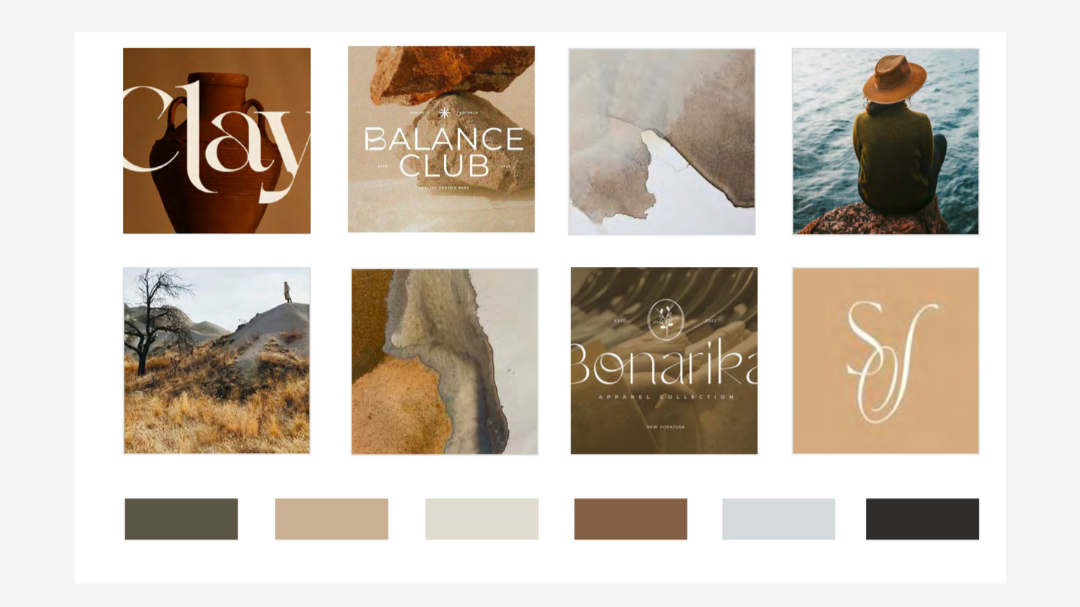
Color psychology is real, especially in mental health branding. We use research-backed color choices with our clients. Blues and greens signal calm and trust (which is why every therapist gravitates toward them). Warmer colors like terracotta or sage can feel more approachable. Purples can communicate creativity and introspection. But here's the thing: the "right" color for your brand is the one that matches YOUR vibe, not what a blog post says therapy colors should be.
Typography matters more than most therapists realize. Serif fonts (the ones with the little feet on letters) tend to feel more traditional and trustworthy. Sans serif fonts feel more modern and approachable. Script fonts can feel feminine and warm, but they're often hard to read. We usually recommend a combination: a more interesting font for your name/logo, and a super readable font for body text.
Our rule for logos: keep them simple and timeless. You don't want to have to rebrand in two years because you picked something trendy. We aim for logos that will still look good in ten years.
Color Palette Selection
We spend a surprising amount of time on color palettes with our clients. Your color palette is typically 3-5 colors that you'll use consistently across all your branding materials. This creates visual cohesion and helps people recognize your brand.
The psychology of color is fascinating. Warm colors (reds, oranges, yellows) are energizing and attention-grabbing, but they can also feel aggressive in mental health contexts. Cool colors (blues, greens, purples) are calming and trustworthy, which is why they dominate therapy branding. Neutrals (grays, beiges, taupes) provide balance and sophistication.
But we also consider cultural meanings. In Western cultures, white signals purity and cleanliness, but in some Eastern cultures, it's associated with death and mourning. Red can mean passion or danger in Western contexts, but it's lucky and celebratory in Chinese culture. If you're serving specific cultural communities, these considerations matter.
Accessibility is non-negotiable in our work. We always check color contrast ratios to ensure text is readable for people with visual impairments. We consider colorblindness (about 8% of men and 0.5% of women have some form of it). We make sure there's enough contrast between colors so your brand doesn't just look like a blob to certain viewers.
Creating your palette usually starts with 1-2 main colors that capture your brand vibe, then adding 2-3 complementary colors for variety and visual interest. We also include neutral colors for backgrounds and text. The key is that these colors should work together harmoniously and be distinct enough to create visual interest.
Photography and Imagery
Let's talk about your headshot, because this is where therapists stress out the most. Your photo is incredibly important – it's usually the first thing people look at on your Psychology Today profile or your website. And yet, so many therapists use awkward, outdated, or overly formal photos that don't represent who they actually are.
Our headshot advice: hire a professional photographer who specializes in personal branding or headshots. Budget around $200-500 for a good session. Wear something that feels like YOU, not what you think a therapist "should" wear. Smile genuinely. And for the love of all that is holy, update your photo every 3-5 years. We've seen therapists using photos from 15 years ago, and when clients meet them in person, there's this awkward moment of disconnect.
The "showing up on camera when you hate photos" struggle is real. We get it. But here's what we tell our camera-shy clients: your ideal clients need to see your face. They need to see your warmth, your humanity. That awkward feeling you have about photos? Your clients probably feel that too. You showing up anyway, even when it's uncomfortable, models the vulnerability you're asking of them.

headshot tips for therapist
Stock photos are tricky in therapy branding. The generic ones (diverse group of people laughing in a circle, woman hugging her knees on a couch looking sad) are immediately recognizable as stock photos and they make your brand feel impersonal. If you're going to use stock photos, invest in high-quality ones from sites like Pexels or Unsplash, and choose images that feel more artistic or abstract rather than obviously staged therapy scenarios.
Office photography matters too! If you have a physical practice space, show it off. People want to know what your office looks like before they step foot in it. It helps them visualize themselves there and reduces anxiety about the first session. You don't need professional photos of your office – good natural lighting and a smartphone camera can work fine.
Inclusive imagery is something we're really intentional about with our clients. Your brand imagery should reflect the diversity of the clients you want to serve. If you say you work with BIPOC clients but all your imagery shows white people, that's a problem. If you say you're LGBTQ+ affirming but only show heteronormative couples, that's a disconnect.

Crafting Your Brand Messaging
Your Brand Voice and Tone
Brand voice is the personality that comes through in your writing, and it's one of the most important (and most neglected) parts of therapy branding. Your voice should be consistent across everything you write – your website, your emails, your social media, your intake forms.
The formal vs. conversational spectrum is where we start. On one end, you have very clinical, professional language: "I utilize evidence-based modalities to facilitate client growth and healing." On the other end, you have very casual, conversational language: "I help people figure out their stuff and feel better." Neither is wrong, but it depends on your brand and your ideal client.
Most therapists we work with land somewhere in the middle-casual range. Professional enough to build credibility, conversational enough to feel approachable. Something like: "I use proven therapy techniques to help you understand yourself better and create the life you want."
Here's the test we use: does this sound like something you'd actually say in a session? If not, it's probably too formal or too generic. We literally have clients read their website copy out loud to see if it sounds like them. If they stumble over words or sound like they're reading a textbook, we rewrite it.
Avoiding jargon while staying professional is an art form. Yes, you know what DBT and CBT and EMDR stand for. Yes, your colleagues know. But your potential clients? They might not. And even if they do, using too much therapy jargon makes you sound inaccessible. We encourage therapists to explain their approach in plain language. Instead of "I use a person-centered, strengths-based approach informed by attachment theory," try "I focus on your unique strengths and help you understand how your early relationships affect your current patterns."
Consistency is key. Your brand voice shouldn't change dramatically from platform to platform. You can adjust slightly (maybe your Instagram captions are a bit more casual than your website), but the core personality should remain the same. We create voice guidelines for our clients so they can maintain consistency even when they're writing content themselves.
Cultural and generational language considerations matter more than ever. If you're targeting Gen Z clients, using millennial slang will make you seem out of touch. If you're working with older adults, overly casual language might not build the trust you need. We help therapists understand the language their ideal clients actually use.
And yes, you can break grammar rules for authenticity! Starting sentences with "And" or "But"? Fine. Sentence fragments? Also fine. Using contractions? Absolutely. Your brand voice should sound human, not like a research paper.


Your Therapist Bio That Actually Connects
We've reviewed thousands of therapist bios, and honestly, most of them are terrible. They're either a boring list of credentials or they're so vague they could describe literally any therapist. "I provide a warm, supportive environment where you can explore your feelings and work toward healing." Cool. So does everyone else.
The framework we teach is story-credential-approach. Start with a brief story or statement that humanizes you and connects with your ideal client's experience. Then share your relevant credentials (yes, people do want to know you're qualified). Then explain your approach in a way that helps people understand what working with you will actually be like.
Here's an example of what we mean. Instead of:
"I am a Licensed Professional Counselor with 10 years of experience working with anxiety and depression. I use CBT and mindfulness-based approaches. I believe in creating a safe, non-judgmental space."
Try:
"I became a therapist after experiencing my own anxiety struggles in my twenties and realizing that the 'just think positive' advice everyone gave me wasn't actually helping. Now, as a Licensed Professional Counselor with a decade of experience, I help high-achieving adults who are tired of white-knuckling their way through life learn practical tools to actually feel better. My approach combines cognitive behavioral techniques with mindfulness practices, and my clients describe our work together as practical, warm, and occasionally funny."
See the difference? The second one tells you WHO this therapist is, who they work best with, and what it's actually like to work with them.
Making it about them (your ideal client) not just you is crucial. Yes, your bio needs to establish your credibility, but it also needs to make potential clients feel seen and understood. We weave in language that speaks directly to the client's experience throughout the bio.
Length is something therapists always ask about. For your main About page on your website, aim for 300-500 words. Long enough to tell your story and establish credibility, short enough that people will actually read it. For directory profiles like Psychology Today, you're usually limited to 150-300 words, so you need to be more concise.
SEO optimization matters for your bio, especially on your website. We incorporate relevant keywords naturally throughout. If you specialize in "anxiety therapy for new moms in Chicago," those words should appear in your bio. But it should never sound robotic or keyword-stuffed.
Common bio mistakes we see constantly: listing every single credential and training you've ever done (nobody cares that you completed a weekend workshop in 2012), being too vague about who you work with, forgetting to include your personality, making it all about your approach without addressing client pain points, and using the therapist's "we" (as in "we will explore your patterns" – just say "you'll explore your patterns").
Want a template to help you write your copy? Grab one for just $1 here!
Your Elevator Pitch
Your elevator pitch is that 30-second introduction you give when someone asks what you do. And yes, therapists need one, even though networking makes many of you want to hide under a blanket.
The formula we teach is: I help [specific type of person] with [specific problem] so they can [desired outcome].
Instead of "I'm a therapist," try: "I help burned-out working moms who feel like they're drowning in responsibilities figure out how to set boundaries and actually enjoy their lives again."
The beauty of a good elevator pitch is that it naturally leads to follow-up questions. People will say "Oh, how do you do that?" or "That's interesting, tell me more!" It opens the conversation instead of closing it.
Adapting your pitch for different audiences is important. What you say at a professional networking event might be slightly different from what you say at a dinner party. We help clients develop 2-3 variations of their pitch for different contexts.
For socially anxious therapists (which is many of you!), we recommend practicing your pitch out loud until it feels natural. Record yourself saying it. Say it to your pets. Say it in the shower. The more you practice, the less awkward it feels.
Written vs. verbal elevator pitches serve different purposes. Your verbal pitch can be more conversational and flexible. Your written pitch (like in your Instagram bio or email signature) needs to be more concise and punchy. But the core message should be the same.

Building a therapy brand that feels authentic isn't about becoming someone you're not – it's about getting crystal clear on who you are and who you serve best, then showing up consistently as that person. We know it feels vulnerable. We know it feels like maybe you should just stick with the beige stock photos and the word "welcoming" in your bio. But you deserve to build a practice filled with clients you're genuinely excited to work with, and they deserve to find you.
The truth is, your ideal clients are out there right now, scrolling through directories, feeling overwhelmed and disconnected by all the generic therapy websites. Your brand – your authentic, specific, YOU brand – is what's going to make them stop scrolling and think "finally, someone who gets it."
We've worked with hundreds of therapists over the past decade years, and the pattern is always the same. The therapists who invest in their brand early, who get clear on their message, who show up consistently and authentically – they're the ones with full practices, lower burnout, and the freedom to do their best work.
Start small if you need to. Pick one thing from this guide – maybe it's rewriting your bio, maybe it's finally getting those professional photos taken, maybe it's just getting clear on who you actually want to work with. Then do the next thing. Your brand will evolve as you do, and that's not just okay, it's perfect.
And if you're feeling overwhelmed by all of this? That's exactly why branding agencies like ours exist. We help therapists translate their clinical expertise and authentic selves into brands that actually work. We handle the strategy, the design, the messaging, so you can focus on what you do best – helping people heal.
Your ideal clients are waiting for you. Let's help them find you.